Aluminum oxide ( Al₂O₃ ) is one of the most important and widely used ceramic materials worldwide. This valuable material is the primary raw material for the production of aluminum metal and hundreds of other industrial products. Aluminum oxide occurs naturally, predominantly as bauxite , and is considered a strategic material in mining, refractory material production, the ceramics industry, electronics, industrial catalysts, petroleum refining, the pharmaceutical industry, specialty filters, and even the military sector.
Aluminum is one of the lightest, strongest, and most versatile metals in the world, and its production is based almost exclusively on aluminum oxide. Due to its high hardness, good heat resistance, and unique chemical properties, aluminum oxide is also widely used in over 50 different industries.
Below you will find detailed information about the definition of aluminum oxide, its types, properties , applications , manufacturing processes and its importance.
What is aluminum oxide?
Aluminum oxide is a naturally occurring compound of oxygen and aluminum found in the mineral corundum. Corundum serves as the starting material for the production of rubies (and sapphires). This clearly demonstrates the exceptional hardness and stability of aluminum oxide.
Aluminium oxide is produced as a white powder and is used in various industries depending on its purity and crystal structure.
Aluminum oxide exists mainly in two forms:
1. Alpha-aluminum oxide
This crystal is characterized by high stability at elevated temperatures, high hardness , and insolubility in water and common acids. It finds wide application in the ceramics, refractory, abrasives, and electronics industries.
2. Gamma aluminum oxide
This material is morphologically unstable but possesses an extremely large specific surface area. Its most common applications include the petroleum industry, catalyst production, and use as a surface absorbent.
Unique properties of aluminum oxide
Aluminum oxide is one of the most popular construction materials. Its most important properties include:
1. Extremely high hardness
Aluminum oxide has a Mohs hardness of 9, making it one of the hardest natural materials after diamond. Because of this property, it is used to manufacture abrasives such as sandpaper, grinding stones, and polishing tools.
2. Excellent heat resistance.
Aluminium oxide remains stable up to temperatures of 2050°C. This property is important in the refractory and metallurgical industries.
3. Excellent resistance to chemical corrosion.
Aluminium oxide is resistant to most acids, alkalis, salts, oxidizing agents and high temperatures and is therefore widely used in the chemical, oil and gas industries.
4. Good thermal conductivity
Although it is a good electrical insulator, it also has high thermal conductivity, making it ideal for use in electronic components.
5. Electrical insulation
Aluminium oxide is one of the best electrical insulating materials and is therefore widely used in the electrical and electronics industries.
6. High mechanical strength
It is characterized by high corrosion resistance, impact resistance, pressure resistance and wear resistance.
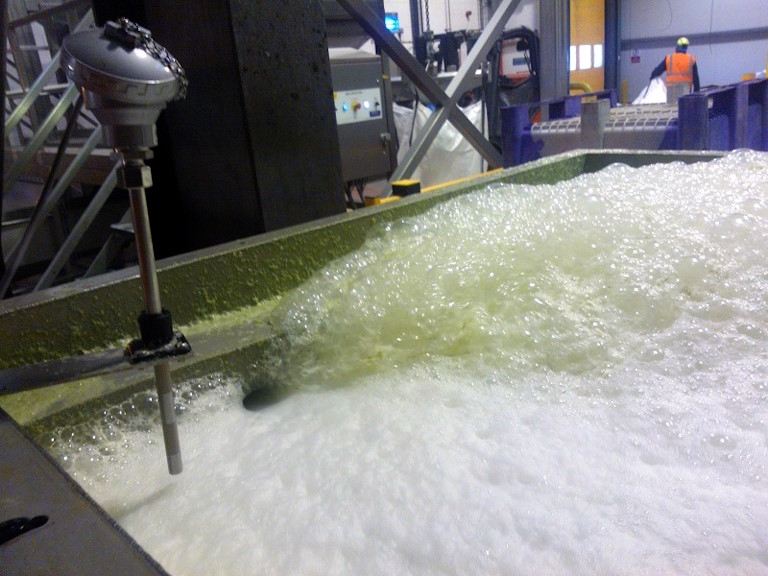
Sigma-Aldrich EX-CELL anti-foam foam
Types of aluminum oxide
Aluminum oxide can be classified into different types based on manufacturing process, crystal structure, particle size and purity:
1. Calcined aluminum oxide
This type of aluminum oxide is heat-treated at high temperatures and is used in the production of refractory materials, industrial ceramics and abrasives.
2. Activated aluminum oxide
It has a large surface area and can be used for water purification, moisture absorption, fluoride absorption and catalysis.
3. Aluminum oxide in sheet form
This material is characterized by large, coarse-grained particles and high strength. It is used in the production of aluminum oxide refractory bricks, cement kilns, and steel.
4. Molten aluminum oxide
It is produced by melting aluminum oxide in an electric arc furnace. It is characterized by high hardness and is frequently used in the manufacture of abrasives and cutting tools.
5. α-Aluminium oxide (α-Al₂O₃).
The most stable form of aluminum oxide at high temperatures.
6. Gamma-aluminum oxide (γ-Al₂O₃).
It is recommended to use active aluminum oxide with a high specific surface area as a catalyst.
Application of aluminum oxide in various industries
Aluminum oxide is a versatile and strategically important material used in almost every industry. Its main applications include:
1. Production of aluminum metal
Approximately 90% of the world’s alumina production is used to manufacture aluminum. This process takes place in aluminum smelters through electrolysis.
Without alumina, aluminum production would be impossible.
2. Production of heat-resistant materials
Due to its excellent heat resistance, aluminum oxide is an important raw material for the production of the following products:
-
Fireproof bricks
-
Crucible for metals
-
molds
-
Interior walls of steel and cement kilns
This industry is one of the largest consumers of aluminium oxide.
3. Technical Ceramics
Aluminium oxide is used in the manufacture of a wide range of industrial ceramics, including:
-
Electroceramics (insulators)
-
Corrosion-resistant ceramic
-
Car parts
-
Bioceramics
-
Chemical supply lines
Alumiceras are even used in the aerospace industry.
4. Oil, gas and petrochemical industry
Activated aluminum oxide is one of the most important components of the catalyst and is used in the following processes:
-
catalytic cracking
-
Hydrocarbons absorb water.
-
Natural gas purification
-
Separation of sulfur compounds
He plays a crucial role.
5. Water purification and fluoride absorption.
Activated aluminum oxide can absorb fluorides , heavy metals, and various impurities. Therefore, it is used in the following systems:
-
Water purification in urban areas
-
Start filter
-
Industrial processing plant
It was used.
6. Abrasives
Due to its extremely high hardness, aluminum oxide is used in the production of the following products:
-
Sandstone
-
sandpaper
-
Polishing tools
-
Cutting blade
It was used.
7. Medicine and Dentistry
Aluminium oxide is a biocompatible material used in the manufacture of the following products:
-
Dental implants
-
artificial joint
-
surgical instruments
-
Corrosion-resistant medical ceramics
suitable.
8. Electronics and Electricity
Due to its excellent electrical insulation properties and thermal stability, aluminum oxide is used in the manufacture of the following products:
-
Electronic circuit board
-
High-voltage insulator
-
Semiconductor screen
-
cooler
It was used.
9. Chemical Industry
Aluminum oxide acts as a catalyst and absorbent in many reactions.
10. Glass and enamel production
It is used in the production of heat-resistant enamel for glass and tiles.
Processes for the production of aluminium oxide
Aluminum oxide is typically obtained from bauxite. The best-known production method is the Bayer process.
Production phases:
1. Crushing of bauxite
Bauxite rock is crushed to reduce its particle size.
2. Soluble in sodium hydroxide (NaOH).
Aluminium oxide is dissolved in an alkaline solution, then the impurities are separated.
3. Precipitation
A saturated solution leads to the precipitation of aluminum hydroxide.
4. Calcination
At high temperatures, aluminum hydroxide transforms into pure aluminum oxide.
At this stage, a pure white aluminum oxide powder is obtained.
Commercial aluminum oxide packaging
Aluminium oxide is typically packaged in the following way:
-
25 kilograms
-
50 kilograms
-
a sack with a capacity of one ton
He saved the day.
Further levels include the following:
-
active network
-
Motivation level
-
High-quality ceramics
-
Abrasion level
That’s all.
Properties of high-quality aluminum oxide
The following points should be considered when purchasing aluminium oxide :
-
High-purity aluminum oxide (typically 99% or more)
-
uniform particle size
-
Structure type (Alpha or Gamma)
-
It is free of impurities such as iron.
-
Stimulation of surface activity
-
Pure white
Aluminum oxide producing countries of the world
The largest aluminum oxide producing countries include:
-
china
-
Australia
-
Brazil
-
India
-
Russia
-
Guinea
Bauxite deposits can also be found in the Iranian cities of Yazd, Sabzevar and Jejarm.
Advantages of using aluminum oxide
-
Excellent heat resistance
-
High chemical stability
-
High mechanical strength
-
Good electrical insulation properties.
-
Environmental compatibility
-
It is characterized by high hardness and long service life under abrasive conditions.
-
Temperature resistant up to over 2000 degrees Celsius.
In conclusion
Aluminum oxide (Al₂O₃) is undoubtedly one of the most important metallic and industrial materials worldwide. It not only forms the basis for aluminum production but also plays a crucial role in numerous high-tech industries, including the oil and gas industry, the pharmaceutical industry, the electronics industry, the ceramics industry, the refractory industry, and the abrasives industry.
Due to its unique properties such as extremely high hardness, thermal stability, insulating properties and chemical resistance, aluminum oxide has become one of the most widely used and valuable ceramic composite materials.
When planning to purchase aluminum oxide, pay attention to the different qualities, purity levels, structure types and manufacturers, as a specific type of aluminum oxide is required for each application.