In the modern world, all industries are exposed to large quantities of corrosive chemicals. These substances can cause significant damage to equipment, buildings, pipelines, facades, and even human health. From the oil and gas industry to the petrochemical industry, and from the food and pharmaceutical to the water treatment and energy sectors, all industries come into contact with acids, alkalis, salts, and other corrosive compounds in some form. Therefore, the corrosion resistance of materials has become a crucial factor in their selection and system design.
Chemical stability refers to a material’s ability to maintain its physical, chemical, and mechanical properties in aggressive chemical environments. High chemical stability leads to a longer service life for equipment , lower maintenance costs, and improved system safety. This article provides an overview of the concept of chemical stability, types of corrosive materials, degradation processes, methods for improving corrosion resistance, and their industrial applications.
Which substances cause corrosion?
Corrosive substances are compounds that react chemically with other materials, causing damage. This damage can manifest as corrosion of metals, degradation of polymers, weakening of ceramics, or changes in the surface properties of materials.
The most important types of corrosive substances include:
-
Acids such as sulfuric acid, hydrochloric acid and nitric acid.
-
Alkalis such as sodium hydroxide and potassium hydroxide .
-
Salts and electrolytes such as chlorides and sulfates.
-
Corrosive gases such as chlorine, ammonia and sulfur dioxide.
-
A humid and oxidizing environment accelerates corrosion.
The degree of corrosion of a material depends on factors such as concentration, temperature, pressure, pH value and contact time.
The concept of chemical stability
Chemical stability refers to a material’s ability to resist or minimize chemical reactions, melting, cracking, or structural changes when exposed to aggressive chemicals. This property plays a crucial role in selecting suitable materials for industrial environments.
Material with high chemical stability:
-
It is not subject to erosion.
-
Preservation of its mechanical properties
-
No color changes, swelling or cracks were observed .
-
To ensure predictable performance
The importance of chemical stability in various industries
Chemical stability is not only a technical property, but also an economic, safety and environmental aspect.
The most important advantages of high chemical stability:
-
Extending the service life of devices
-
Reduced maintenance and replacement costs, as well as less production downtime.
-
Improving employee safety and workplace safety.
-
Prevention of hazardous material leaks
-
Reduction of harmful effects on the environment
Therefore, process engineers and designers are constantly searching for materials with maximum chemical resistance under the required operating conditions.
Antifoam emulsion Momentive SAG 1572
Mechanism of chemical decomposition
Materials can be degraded in a variety of ways, and understanding these degradation processes is crucial for improving environmental sustainability.
The most important mechanisms include the following:
1. Chemical corrosion
In this case, the metal reacts directly with the aggressive environment. A classic example of this mechanism is contact corrosion between metal and acid.
2. Electrochemical corrosion
This type of corrosion typically occurs in environments containing moisture and electrolytes , and involves the formation of anodic and cathodic cells on the metal surface.
3. Polymer degradation
Some chemicals can cause polymer chains to swell, soften, or break, resulting in a reduction of mechanical strength.
4. Stress corrosion cracking and corrosion
The combined effect of mechanical stress and corrosive environments can lead to the formation and propagation of microcracks.
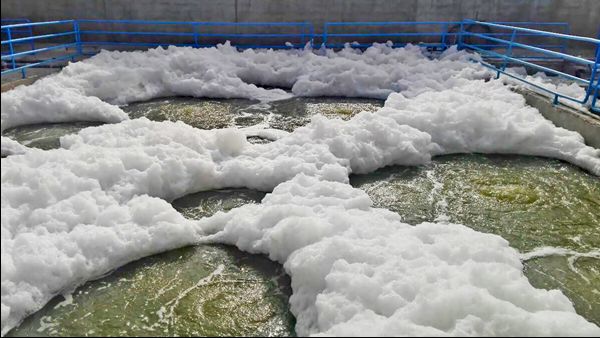
Chemical stability of various materials
Metals and alloys
Metals are inherently susceptible to corrosion, but their resistance can be increased through alloys and coatings. Stainless steel and nickel-titanium alloys are examples of metals with high chemical stability.
polymer
Due to their non-metallic properties, polymers exhibit exceptional performance in many aggressive environments. Materials such as polytetrafluoroethylene (PTFE), polyvinyl chloride (PVC), polypropylene (PP), and polyvinylidene fluoride (PVDF) are highly resistant to acids and alkalis .
Ceramics and glass
Ceramic materials are generally characterized by high chemical stability, but their brittleness limits their applications. Borosilicate glass, on the other hand, finds wide use in laboratories due to its excellent chemical resistance.
Methods for increasing chemical stability
To combat corrosive substances, industry uses various solutions:
-
Select the appropriate material depending on the type of corrosion-causing material.
-
Use protective coatings such as epoxy resin paints and polymer coatings.
-
Control of environmental conditions such as temperature, humidity and pH value.
-
Proper design can prevent the accumulation of corrosive substances .
-
Use corrosion inhibitors.
Methods for assessing chemical stability
Various tests are carried out to assess the corrosion resistance of materials :
-
chemical immersion test
-
Weight loss test
-
Investigation of changes in mechanical properties.
-
Visual and microscopic examination of the surface
-
Accelerated corrosion testing
The results of these tests serve as a basis for material selection in industrial projects.
The role of chemical stability in industrial applications.
Chemical stability plays a crucial role in the following industries :
-
Oil, gas and petrochemical industry
-
chemical and pharmaceutical industry
-
Food and beverage industry
-
Water and wastewater treatment systems
-
Energy industry and power plants
In these applications, the selection of materials with sufficient chemical resistance can determine whether a system is safe and sustainable or expensive and risky.
In conclusion
Chemical stability is a crucial factor in the design and operation of industrial plants and systems. A comprehensive understanding of corrosive substances, their decomposition mechanisms, and the properties of various materials helps engineers make optimal decisions. Improving chemical stability not only extends the service life of plants but also ensures safety, economic efficiency, and environmental protection.
In the long run, investing in durable materials and corrosion-resistant solutions is a smart decision for any industry.